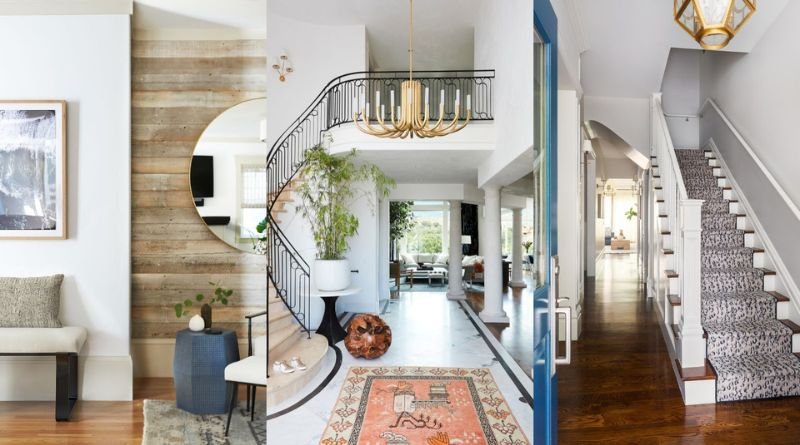
Key Takeaways
- A successful entryway looks welcoming and supports daily habits.
- Layered lighting and reflective surfaces can make a foyer feel brighter and larger.
- Storage zones for shoes, coats, bags, keys, and mail prevent clutter from spreading.
- Modern farmhouse style balances rustic materials with clean lines and simple forms.
- Exterior details, including the porch, door, lighting, and house numbers, should feel connected to the interior.
A modern farmhouse entryway should make coming home easier while giving guests an inviting first impression. From the front path to the interior drop zone, every choice should support comfort, movement, and everyday routines. Choosing high-quality wood exterior doors can establish the warm, grounded look that carries through the rest of the entrance.
The best results come from pairing practical features with restrained styling. Instead of filling the area with decorative signs and extra furniture, focus on useful storage, comfortable lighting, durable finishes, and a few natural textures that make the space feel personal.
Why the Entryway Matters
The entryway is the home’s first working zone. It handles transitions between indoors and outdoors, creates a place to pause, and often collects the most-used items. A family may need room for school bags, muddy shoes, dog leashes, and coats, while a smaller household may only need hooks, a key tray, and a narrow console. In either case, appearance and function need to be planned together.
Modern Farmhouse Style Basics
Modern farmhouse design blends relaxed, natural details with cleaner shapes and less visual clutter than traditional country decor. Think warm wood, woven baskets, ceramic accessories, simple metal hardware, and comfortable neutral colors. The goal is balance. Too much distressed wood or themed decor can make the room feel dated, while too many sharp black-and-white finishes can make it feel cold.
How to Bring in More Light
Start by keeping nearby windows, sidelights, and glass door panels clear of bulky furniture. A mirror opposite a window can reflect daylight and add depth, especially in a narrow foyer. Guidance about window placement and sunlight also reinforces the value of avoiding obstructions that limit natural light.
At night, use more than one light source when possible. A ceiling fixture provides general illumination, while sconces or a small table lamp create a softer glow. Choose warm-white bulbs so that wood tones and creamy paint colors remain inviting rather than harsh.
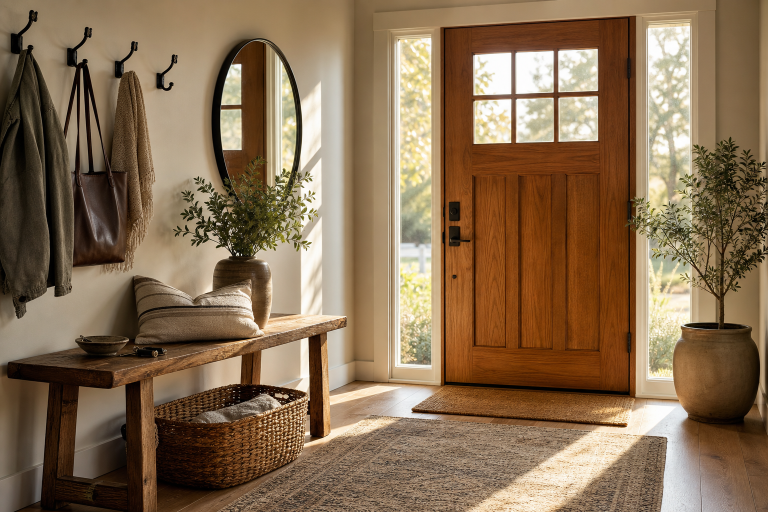
Storage for Real Daily Use
Organized entryways work because every frequently used item has a clear home. Divide the space into a few simple zones:
- Arrival zone: Install hooks or pegs for coats, hats, and bags.
- Seating zone: Add a bench or stool for putting on shoes.
- Drop zone: Use a tray, bowl, or shallow drawer for keys and sunglasses.
- Shoe zone: Choose a low cabinet, basket, or shelf that is easy to reach.
- Mail zone: Keep paper contained with a wall organizer or designated drawer.
Open storage is convenient, but closed storage is often better for families who need the room to look tidy quickly. Select the mix that matches your real habits, not an idealized version of them.
Warm, Durable Materials
Entryways see dirt, moisture, pet traffic, and repeated impact from shoes and bags, so materials should be both attractive and resilient. Wood brings warmth and natural variation. Stone or tile feels grounded and holds up well near exterior doors. Metal works beautifully for hooks, lighting, and cabinet pulls, while woven baskets soften hard surfaces and hide small items.
Consider maintenance before committing to a finish. A pale rug may look fresh but show every mark, while an overly rough bench can be uncomfortable for daily use. Choose materials that fit the climate, the household, and the amount of cleaning you are willing to do.
Color and Hardware Pairings
Begin with a calm base, such as soft white, warm gray, or muted beige, then add contrast through black, bronze, brass, deep green, or dusty blue accents. Natural wood tones keep neutral walls from feeling flat. Repeat one or two finishes throughout the entry, such as black hooks, black sconces, and black house numbers, to make the design feel intentional without making every piece match.
Small Entryway Solutions
A small entryway does not need to imitate a large foyer. Use shallow furniture, vertical hooks, a floating shelf, and a slim-profile shoe cabinet to preserve walking space. A round mirror can soften a tight hallway, while one substantial feature, such as a statement light or framed artwork, has more impact than several tiny accessories. Keep a clear route from the threshold into the home.
Connecting Interior and Exterior
The entry experience begins before the front door opens. Coordinate the path, porch lighting, house numbers, planters, doormat, and door color with the interior palette. Repeat a porch accent color inside through a pillow, rug pattern, or artwork. Ensure planters do not block the walkway and that house numbers are easy to read from the street.
Comfort matters as much as curb appeal. Basic steps, such as weatherstripping doors and reducing air leaks, can help make the entrance feel less drafty during seasonal temperature changes.
A Simple Entryway Planning Process
- Measure wall widths, ceiling height, door swing, and walking clearance.
- List the items your household uses every day.
- Choose one focal point, such as a mirror, light fixture, artwork, or bench.
- Select a base color, a wood tone, and one accent finish.
- Install storage before buying decorative accessories.
- Layer lighting, then finish with a rug, basket, plant, or textile.
Common Mistakes to Avoid
- Blocking the door swing with a bench or console.
- Using a rug that slides, curls, or creates a tripping hazard.
- Hanging a light fixture too low in the walking path.
- Adding too many signs, baskets, and seasonal decorations.
- Ignoring the need for closed storage.
- Choosing finishes based only on appearance instead of upkeep.
Frequently Asked Questions
What makes an entryway feel modern farmhouse?
It is the mix of natural materials, simple lines, practical storage, soft neutrals, and a limited number of darker accents. Balance matters more than following a strict formula.
How can a small entryway look larger?
Use light colors, mirrors, wall-mounted storage, slim furniture, and a clear walking path. Avoid crowding the space with several small decorative pieces.
What is the best lighting for an entryway?
A combination of overhead light and softer accent lighting usually works best. Make sure the area near locks, steps, hooks, and storage is bright enough for daily use.
How can an entryway feel warm without looking cluttered?
Repeat a few materials and finishes, keep the palette limited, and choose decor that is useful. One basket, plant, mirror, or artwork can add character without overwhelming the room.
Conclusion
A well-designed modern farmhouse entryway feels welcoming, organized, and easy to maintain. It does not depend on expensive features or crowded styling. Start with clear measurements and daily storage needs, then add comfortable lighting, durable materials, and a thoughtful mix of texture and simplicity.