
Key Takeaways
- Luxury coastal homes should be evaluated for lifestyle fit, not just views, finishes, and asking price.
- Flood exposure, storm surge, elevation, insurance, and salt-air maintenance can significantly affect ownership costs.
- Waterfront usability depends on practical details such as dock condition, water depth, bridge clearance, and seawall integrity.
- Neighborhood access, privacy, nearby services, and evacuation routes should be reviewed before making an offer.
- Early insurance research and specialized inspections can prevent costly surprises after closing.
Buying a coastal luxury home is about far more than a striking view, a private dock, or an impressive address. The right property should support how you plan to live while giving you a realistic picture of long-term costs, weather exposure, maintenance demands, and resale considerations. For buyers exploring Florida’s Gulf Coast, the Sarasota Luxury Real Estate guidance from the Laughlin Tanner Group offers a useful starting point for comparing high-end homes across Sarasota’s waterfront, downtown, barrier-island, and lifestyle-focused neighborhoods. With deep experience serving Sarasota luxury buyers and sellers, the group brings a valuable local perspective to decisions where property type and location can matter as much as the home itself.
A well-informed purchase begins before the first showing. Buyers who look beyond finishes and listing photos are better prepared to identify a home that fits their routines, risk tolerance, and plans for the future.
Why Coastal Luxury Homes Require More Research
Coastal properties face conditions that many inland homes do not. Wind, heavy rain, salt air, flooding, erosion, high humidity, and storm surge can affect everything from exterior finishes to insurance availability. A high purchase price does not automatically mean a newer home, resilient construction, or low maintenance requirements.
Coastal communities also face both immediate weather events and longer-term environmental pressures. The National Oceanic and Atmospheric Administration’s overview of coastal threats explains why hurricanes, coastal storms, flooding, erosion, and sea-level rise deserve attention during a property search. Buyers should view each home as both a place to live and a long-term financial commitment that requires planning.
Start With The Lifestyle, Not The Listing
Before comparing homes, define the purpose of the purchase. A full-time residence may need reliable access to healthcare, shopping, schools, and an airport. A seasonal retreat may prioritize privacy, views, security, and low-maintenance systems. A multigenerational home may require flexible guest space, accessibility, and room for gatherings.
Questions To Clarify Your Priorities
- Will the property be used year-round, seasonally, or primarily on weekends?
- Is privacy more important than walkability and proximity to restaurants?
- Will children, guests, or extended family visit often?
- Is boating a regular activity or simply a feature you enjoy looking at?
- Will rental income be part of the ownership plan?
Check The Location Beyond The View
Two similarly priced homes can deliver very different ownership experiences. A barrier-island property may provide beach access and a resort-like atmosphere, while a downtown residence can offer dining, cultural venues, and easier day-to-day convenience. A secluded waterfront estate may provide exceptional privacy but require longer drives for services.
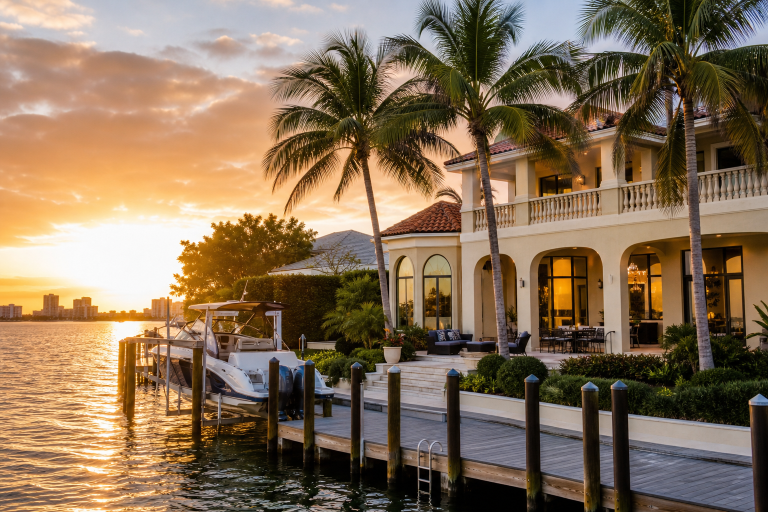
Compare travel times during busy seasons, bridge or causeway access, nearby medical care, noise levels, and planned development. Review zoning and future construction near the property, especially where a new building could affect views, traffic, or privacy. Also consider how easily you can reach home during storms, major events, or peak holiday weekends.
Review Flood, Storm, And Insurance Risks
Do not wait until the final days of a contract period to investigate risk and insurance. Request the current flood-zone designation, elevation information, and an elevation certificate if one is available. Ask the seller about prior storm damage, water intrusion, insurance claims, repairs, and upgrades.
Buyers should also obtain homeowners, wind, and flood insurance estimates early. Review roof age, impact-rated openings, shutters, garage doors, drainage, generator capacity, and the condition of major exterior components. The National Hurricane Center’s storm surge overview is a helpful reminder that surge can move inland through coastal waterways, bays, rivers, and canals. Waterfront risk is not limited to homes directly on the beach.
Inspect Waterfront Features
Waterfront value depends on how usable the water is for your intended lifestyle. A beautiful canal view may not work for a buyer who plans to keep a large boat at home. Water depth at low tide, bridge clearance, the route to open water, dock layout, and lift capacity may be more important than the view itself.
Waterfront Details To Review
- Dock construction, permits, repair history, and remaining useful life.
- Seawall age, visible movement, cracking, drainage issues, and maintenance records.
- Water depth, tidal changes, navigability, and access to open water.
- Boat lift condition, weight limits, electrical components, and controls.
- Rules governing docks, lifts, seawalls, kayaks, and other waterfront equipment.
Calculate The Full Cost Of Ownership
The listing price is only the beginning. Build a realistic annual budget that includes property taxes, homeowner’s insurance, flood and wind coverage, utilities, landscaping, pool care, pest control, security, HOA or condominium fees, and property management if the home will sit vacant.
Create two budgets. The first should reflect a normal year of ownership. The second should be a reserve budget for large expenses, including roof replacement, HVAC work, exterior painting, dock repairs, seawall work, storm upgrades, or major renovations. This comparison can reveal whether an older waterfront estate or a newer home with fewer immediate demands is the better fit.
Compare Property Types And Neighborhoods
- Waterfront estate: Offers privacy, outdoor living space, and possible boating access. Ask about dock, seawall, pool, landscaping, and security costs.
- Beachfront home: Delivers direct access and dramatic views. Review erosion exposure, construction restrictions, insurance needs, and storm resilience.
- Downtown residence: Can provide walkability and reduced exterior maintenance. Review reserves, assessments, parking, rental rules, and building management.
- New construction: May offer modern systems and current building standards. Confirm warranties, completion dates, community fees, and upgrade costs.
Build A Strong Due Diligence Plan
Coastal luxury homes often have distinctive features that require specialized review. Line up qualified professionals before making an offer whenever possible. Depending on the property, that may include a licensed home inspector, roof specialist, HVAC contractor, marine contractor, surveyor, insurance advisor, title professional, and tax advisor.
Review seller disclosures, surveys, permits, repair invoices, elevation documents, HOA or condominium financial records, meeting minutes, and rental restrictions. Confirm that additions, pools, docks, boat lifts, and seawalls were properly permitted. A thorough review creates a clearer negotiating position and reduces the chance of surprises after closing.
Questions To Ask Before Making An Offer
- What makes this property difficult to replace?
- Which repairs or upgrades are likely within the next five years?
- How did the home perform during previous major storms?
- Are there insurance, financing, permit, or waterfront-structure concerns?
- What restrictions apply to renovations, rentals, pets, boats, or guests?
- What costs are easiest to overlook after closing?
- Would the property still work if your plans changed?
Conclusion
The best coastal luxury home is not always the largest, newest, or most visually impressive option. It is the property that aligns with your preferred lifestyle, has understandable risks, fits a realistic ownership budget, and remains useful long after the excitement of the first showing fades.