Many parents today struggle to get their kids outside. From the moment children wake up, screens compete for their attention, making the backyard feel unimportant. Ride-on vehicles offer a practical solution by combining movement, autonomy, and play in a way that naturally draws children outdoors.
These toys give kids what screens cannot: the excitement of movement, the freedom to choose where to go, and full-body activity that keeps them engaged. Children gain these benefits without repeated prompting from parents to spend time outside.
So, if you’re looking for a gift or activity that genuinely encourages outdoor play, ride-on vehicles are a strong option. They give children the sense of freedom and adventure they enjoy, while also supporting physical activity, coordination, and time outdoors.
Independence Builds Confidence at Every Age
One of the most valuable developmental benefits of ride-on toys is the sense of independence they provide. Independence plays a critical role in early childhood development, supporting confidence, decision-making skills, and a child’s sense of autonomy as they begin to explore their environment.
When a toddler steers a push car in the garden, they begin making simple decisions about direction and speed. A four-year-old using a battery-powered vehicle in the driveway encounters more complex choices that require coordination and control. Each stage supports growing confidence and helps children develop trust in their own judgment.
The range of ride on toys available today means there is an appropriate option for every age and developmental stage.
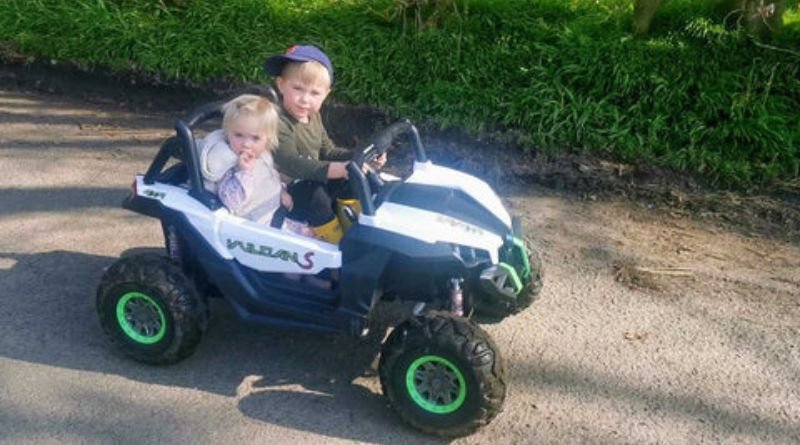
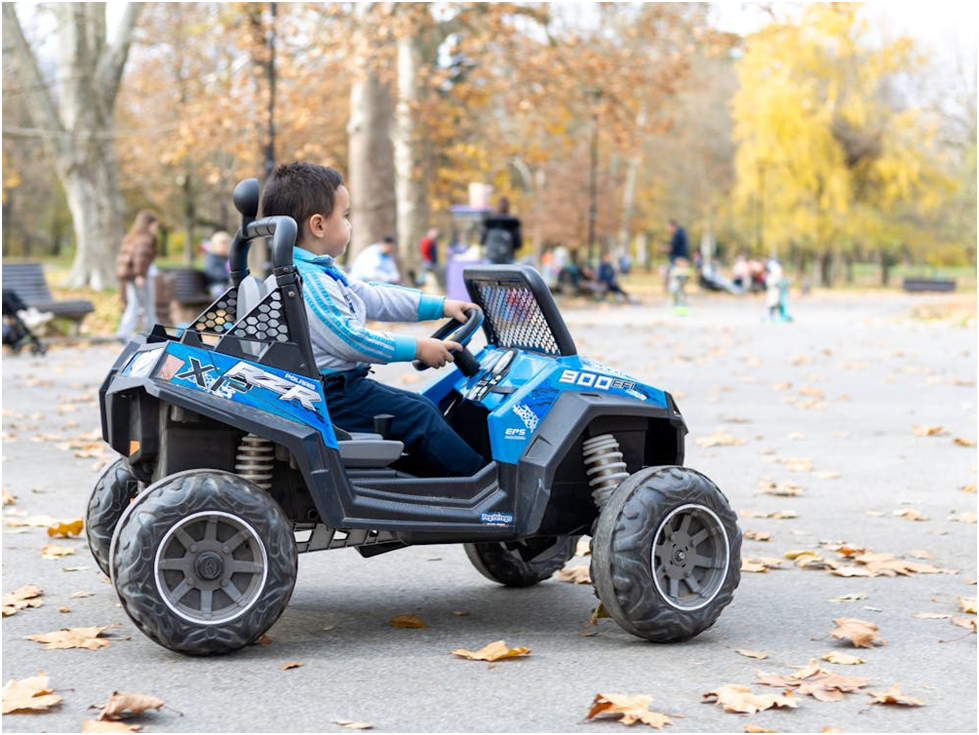
For example, push-along models suit toddlers who are still developing balance and leg strength. Pedal-powered vehicles are well suited for preschool and early primary-aged children, helping build coordination and endurance. Battery-powered vehicles are generally more appropriate for older preschoolers and school-aged children, as they introduce steering control and spatial awareness.
The progression from simple to more complex vehicles reflects a child’s developmental growth and helps maintain engagement over time.
Physical Development Happens While They Play
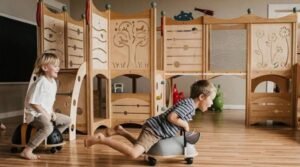
Children using pedal cars, electric vehicles, balance bikes, and scooters develop gross motor skills while playing. Steering requires hand-eye coordination, while accelerating and braking support spatial awareness.
Navigating obstacles also builds judgment around speed, distance, and timing. These skills can support future activities such as cycling, organised sports, and general physical confidence.
In addition to skill development, ride-on vehicles can contribute to moderate physical activity, supporting cardiovascular health when used regularly as part of active play. Children remain in motion as they push, pedal, balance, and shift their weight, which encourages sustained activity in an enjoyable format.
Outdoor Time Reduces Screen Dependence
Studies link excessive screen time to attention difficulties, sleep disruption, and reduced physical fitness in children. Parents looking to encourage more outdoor activity benefit from options that match the level of engagement screens provide.
Ride-on vehicles offer this alternative by combining stimulation, novelty, and physical movement in an outdoor setting. This makes outdoor play more appealing without relying solely on rules or restrictions around screen use.
Early positive experiences with outdoor play can help shape long-term habits, making children more likely to remain physically active as they grow. Regular use of ride-on toys helps reinforce the idea that outdoor activity is enjoyable and self-motivated.
Social Play Develops Naturally
When multiple children have access to ride-on vehicles, social interaction tends to develop naturally.
Activities such as racing, following routes, creating shared play scenarios, and taking turns encourage communication and cooperation. These interactions support the development of interpersonal skills that are important in school and group environments.
Neighbourhood play can further enhance this experience by creating opportunities for spontaneous interaction. Children playing outside are more visible and accessible to others, which can encourage participation and shared activity in a low-pressure setting.
Safety Features Have Advanced Significantly
Modern ride-on vehicles include a range of safety features that help address common parental concerns about speed, stability, and supervision. Parental remote controls on some battery-powered models allow adults to manage speed and direction when needed.
Lower centres of gravity can reduce the likelihood of tipping, while features such as seat belts, enclosed seating, and speed limiters contribute to safer operation. These design improvements make outdoor ride-on play more manageable for parents who want to encourage activity while maintaining appropriate supervision.
Establishing consistent safety habits, such as wearing helmets during ride-on play, helps reinforce protective behaviours that can carry over to activities like cycling.
Wrap Up
Ride-on toys combine independence, physical activity, and outdoor engagement in a way that feels natural for children. They support the development of confidence, coordination, and social skills through everyday play experiences.
For parents seeking an activity that encourages movement and reduces reliance on screens, ride-on toys remain a practical and developmentally supportive choice that makes outdoor time more appealing.