Table of Contents
- Green Roofs: Enhancing Energy Efficiency and Biodiversity
- Cool Roofs: Reducing Urban Heat and Energy Costs
- Solar-Integrated Roofing: Harnessing Renewable Energy
- Advanced Insulation Technologies: Boosting Thermal Performance
- Smart Roofing Materials and AI Monitoring: Enhancing Maintenance
- Rainwater Harvesting Systems: Promoting Water Conservation
- Fire-Resistant and Durable Materials: Ensuring Safety and Longevity
- Conclusion
As commercial construction evolves, a growing focus on sustainability is reshaping how buildings function, use resources, and interact with their urban landscapes. By adopting eco-friendly practices, property owners can reduce operational costs and environmental impact. Today, businesses seeking a long-term solution are increasingly turning to specialists, such as a commercial roof replacement company, that understand the critical advancements in roofing technology.
Modern sustainable roofing doesn’t just reduce energy bills; it can also extend roof life, improve urban environmental health, and enhance regulatory compliance. Strategic investments in innovative roofing systems help businesses meet green building standards and demonstrate a commitment to responsible stewardship.
Green Roofs: Enhancing Energy Efficiency and Biodiversity
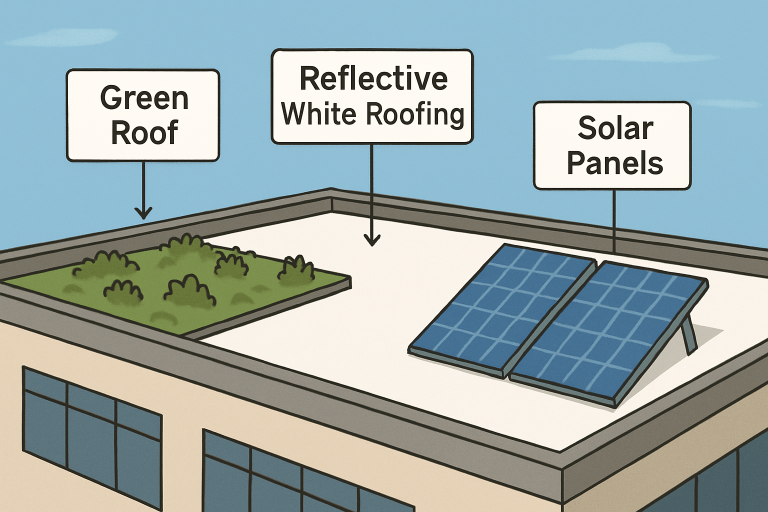
Green roofs, featuring layers of soil and vegetation, provide a remarkable range of benefits for commercial buildings. They contribute significantly to energy conservation by improving thermal insulation, reducing heat loss in winter, and resulting in considerably cooler interiors during hot seasons. Studies demonstrate that green roofs can reduce rooftop temperatures by up to 30°C, leading to substantial savings in HVAC costs and mitigating the damaging effects of the urban heat island phenomenon.
Additionally, green roofs help restore biodiversity in urban settings by providing new habitats for birds, insects, and plants. They absorb airborne pollutants and capture rainwater, helping to cleanse polluted air and manage stormwater runoff. According to the U.S. Environmental Protection Agency, green roofs are an effective mitigation measure for heat islands and urban flooding.
Cool Roofs: Reducing Urban Heat and Energy Costs
Cool roofs are engineered to reflect more sunlight and absorb less heat than standard roofing materials. Utilizing special reflective coatings or light-colored membranes, these systems keep commercial buildings cooler and reduce reliance on air conditioning. The result is less energy use and smaller utility bills, particularly in warm climates where roof surface temperatures can soar.
White or reflective cool roofing products can drop roof surface temperatures by 30–60°F compared to conventional dark roofs. As noted by Energy.gov, this translates to real-world energy savings, reduced greenhouse gas emissions, and slower urban warming.
Solar-Integrated Roofing: Harnessing Renewable Energy
Solar-integrated roofing is among the most rapidly adopted sustainable strategies in commercial construction. Modern innovations such as solar shingles and building-integrated photovoltaics (BIPV) enable seamless integration with traditional roof designs while maximizing the energy-generating potential of unused rooftop space. These cutting-edge systems often produce up to 98% of the output of conventional solar panels.
By harvesting renewable energy, commercial buildings can reduce dependence on the electrical grid and lower carbon footprints, all while taking advantage of clean energy incentives. This not only benefits the environment but also creates an opportunity for significant utility savings over time. Companies like SunStyle and SunTegra offer integrated solar solutions that blend aesthetics with performance.
Advanced Insulation Technologies: Boosting Thermal Performance
High-performance insulation materials are crucial for maximizing the energy efficiency of commercial roofs. Techniques such as spray foam application and rigid insulation boards form tough, moisture-resistant thermal barriers, ensuring optimal interior temperatures year-round. Improved insulation directly translates into lower heating and cooling costs and boosts occupant comfort.
Advanced insulation can increase total energy savings by up to 20%, protecting investments for years to come and reducing the building’s overall environmental footprint.
Smart Roofing Materials and AI Monitoring: Enhancing Maintenance
Innovations in smart roofing materials now allow for embedded monitoring technology. Sensors track changes in temperature, moisture, and even minor structural shifts, providing real-time actionable data so facility managers can address issues such as leaks or insulation failure before they escalate into costly damage.
Paired with AI-powered analytics and drone-assisted inspections, these systems automate maintenance planning and improve it. This not only extends the overall lifespan of commercial roofs but also helps enterprises budget more effectively for long-term repairs.
Rainwater Harvesting Systems: Promoting Water Conservation
Incorporating rainwater harvesting into commercial roofing enables buildings to capture and reuse precipitation for landscaping, sanitation, and cooling. This innovation supports community water conservation efforts and reduces demand on often-strained municipal supplies.
Deployment of such systems has proven effective in water-stressed regions. For example, many commercial properties in Southern California have implemented rainwater harvesting to meet stringent conservation standards and better prepare for droughts.
Fire-Resistant and Durable Materials: Ensuring Safety and Longevity
Building codes and increasing climate risks are driving the adoption of fire-resistant roofing materials. Roof systems that boast UL Class A fire ratings deliver the highest degree of protection against ignition and help organizations meet insurance and safety mandates.
Additionally, materials such as metal roofing are prized for their exceptional durability and longevity. Their resistance to weathering and fire reduces long-term upkeep and replacement cycles, further advancing commercial sustainability efforts.
Conclusion
Sustainable roofing solutions are transforming commercial building practices nationwide, yielding benefits that extend from reduced operational costs to a smaller environmental footprint. By embracing innovative approaches ranging from green and cool roofs to solar integration, advanced insulation, smart technology, and water conservation building owners can make a positive impact on both their businesses and their communities. Forward-thinking enterprises that prioritize sustainability not only safeguard their financial interests but also lead the way in creating healthier, more resilient cities for generations to come.