The cat litter industry pulls in nearly $4 billion a year in the US alone. That’s a staggering number for a product category that, at its core, exists to deal with waste — and a big part of why so many brands keep promising easier, cleaner, more convenient solutions. Flushable litter is one of the more appealing pitches in that space. Scoop, flush, done. No trash bags, no trips to the bin, no smell lingering in the kitchen.
But there’s enough nuance around the topic that it’s worth slowing down and actually understanding what you’re buying into before you switch. If you’ve been researching options, you’ve probably already landed on a few comparisons and guides — including some solid breakdowns of thebest flushable cat litter options currently available. This piece is meant to complement that kind of research with some context that doesn’t always make it into the product descriptions.
What “flushable” actually means in practice
The term gets used loosely. Technically, a litter qualifies as flushable if it’s made from biodegradable materials that break down in water rather than expand or harden. That’s the core distinction from clay-based litters, which contain sodium bentonite — a mineral that swells aggressively on contact with moisture. Clay does a fine job of clumping waste for scooping, but put it in a toilet and you’re looking at potential pipe damage. It behaves more or less like wet concrete once it sets.
Flushable litters sidestep this by using plant-derived or organic materials instead. Wheat and corn are common bases — both contain natural starches that clump loosely when wet without seizing up. Wood-based litters use sawdust or compressed wood chips, which absorb well and break down relatively quickly. Paper litters made from recycled material are another option, often with baking soda added for odor control. And more recently, olive pit litters have entered the conversation — a natural byproduct of olive oil production with a porous structure that absorbs moisture and neutralizes odor without any synthetic additives.
All of these materials are biodegradable. None of them will behave the way clay does in your plumbing.
Why the move toward natural litter makes sense beyond just convenience
Convenience is what most people lead with when they talk about flushable litter, but the environmental angle is arguably just as compelling. Standard clay litter is strip-mined — a process that removes topsoil and rock to access clay deposits underneath, with significant downstream effects on local ecosystems. Millions of tons of used clay litter end up in landfills every year, where it doesn’t break down.
Natural litters flip both of those problems. The source materials are either agricultural byproducts (olive pits, corn husks, wheat chaff) or recycled (paper), and they decompose in the environment rather than sitting in a landfill indefinitely. For cat owners trying to reduce their household footprint, switching litter type is one of the more meaningful changes available.
Dust is another factor that doesn’t get enough attention. Clay and silica litters produce a fine particulate when poured or disturbed. That dust contains crystalline silica — not great for human lungs, and genuinely concerning for cats with respiratory conditions. Natural litters, particularly the denser ones like olive pit, tend to produce very little dust, which matters both for air quality and for cats that are prone to sneezing or skin irritation.
The honest caveats about flushing cat waste
Here’s where it gets complicated, and where some flushable litter marketing quietly glosses over important details.
Even if the litter material itself is toilet-safe, cat feces carry a risk that’s specific to them: Toxoplasma gondii, a parasite that cats can carry without showing symptoms. The problem is that standard wastewater treatment isn’t designed to eliminate toxoplasma — and research has found evidence of the parasite in coastal marine environments, believed to have arrived via sewage systems. Sea otters in particular have been significantly affected. A number of US states have language in their water quality guidelines discouraging flushing cat waste for exactly this reason.
Septic systems are a separate concern. They rely on specific bacterial processes to break down waste, and introducing cat litter — even biodegradable litter — adds a solid load that most septic tanks handle poorly. If you’re on a septic system, flushing litter is generally not a good idea regardless of what the packaging says.
So the practical answer is: check your local municipal water guidelines, don’t flush if you’re on septic, and consider composting or bin disposal for the waste portion even if the litter itself is technically flushable. The litter material being biodegradable is still a meaningful advantage — it just doesn’t automatically make toilet disposal the right call for everyone.
Where olive pit litter fits into this conversation
Paco & Pepper has become one of the more talked-about names in the natural litter space over the past year. The brand was founded in 2020 by Kristina Drobach, whose own cats developed respiratory issues she attributed in part to years of dusty clay litter. After two years developing the formula, she launched a product made entirely from crushed olive pits — a byproduct of olive oil processing that would otherwise go to waste.
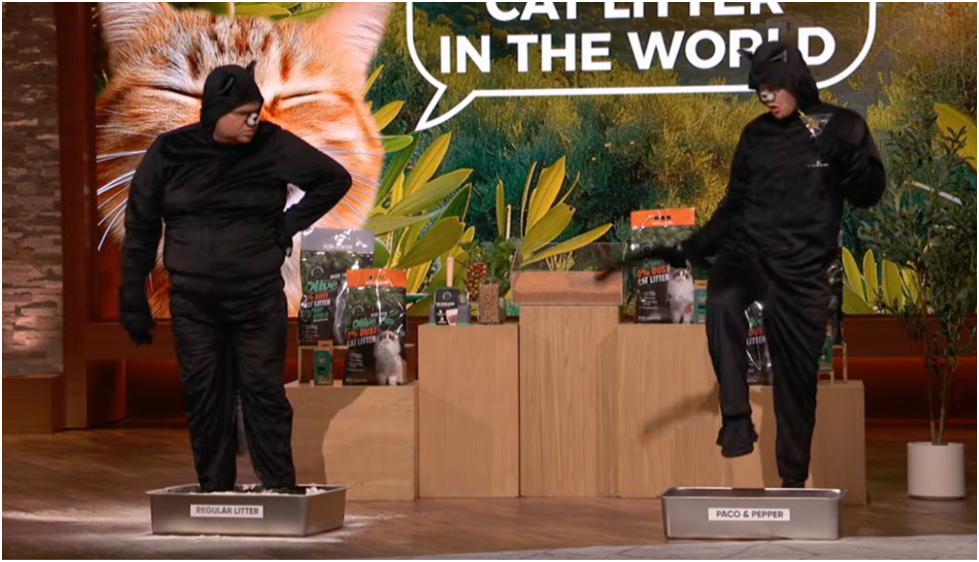
The product got national attention when it appeared on Shark Tank Season 17 earlier this year. Drobach entered seeking $300,000 for 5% equity, and walked Lori Greiner through a live demo — pouring water directly into the litter box to show the clumping speed. The brand didn’t leave with a deal (Kevin O’Leary’s final offer of 20% equity plus royalties was a bridge too far), but the exposure did its job. The company had already hit $1.1 million in revenue in 2024 and was trending toward $1.8 million at the time of filming.
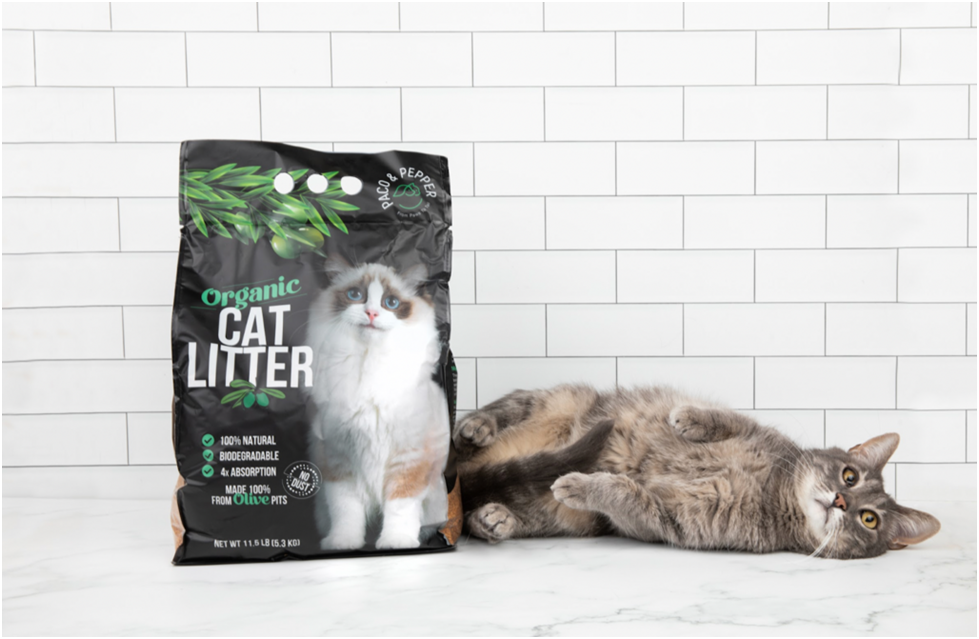
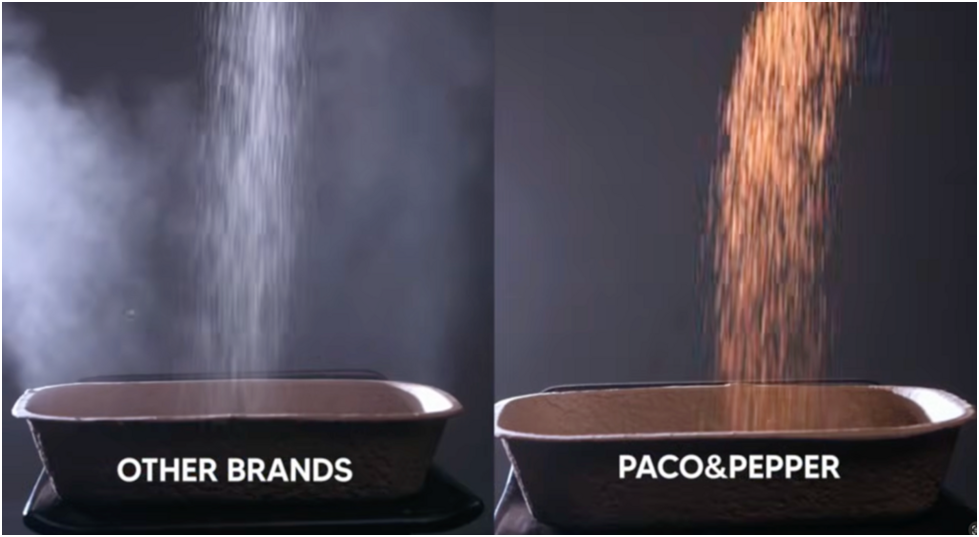
What makes olive pit litter relevant to the flushable conversation specifically: it’s one of the more chemically clean options on the market. No synthetic fragrances, no harsh binders, no silica dust. The formula is lab-confirmed 0% dust — not “low dust,” actually zero. The natural porosity of olive pit granules absorbs moisture fast and traps ammonia smell inside the clump, so odor control doesn’t depend on fragrance masking. And because the material is organic and biodegradable, it doesn’t carry the same landfill permanence problem as clay.
They sell two versions — a classic unscented formula and a charcoal option for stronger odor needs — both in 11.5-pound bags designed to last one cat about a month. There’s also a multi-cat formula with an added natural malodor counteractant. Reviews sit at 4.7 stars across more than 9,000 verified purchases, which is an unusually large sample for a brand that’s only been operating for a few years. The litter is now stocked in Target, Petco, PetSmart, and a handful of regional natural grocery chains.
Switching litters — the part most guides skip
If you’re moving a cat from clay to any natural litter, don’t do it cold turkey. Cats have strong texture preferences and a lot of them will simply refuse a box that feels different underfoot. The approach that works: start with about 20% new litter mixed into the existing product, and increase that ratio over one to two weeks. It’s slower but dramatically reduces the chances of a refusal.
Depth matters more with natural litters than with clay. Two to three inches is the sweet spot — enough for proper clumping without running through the bag faster than necessary. And with lower-dust formulas, you’ll notice the absence of that fine grey cloud when you pour. It sounds minor, but after years of clay it’s a genuinely noticeable difference.
Full product details, subscription options, and a store locator are available on the Paco & Pepper website.